Internal & GAP audits for ISO 27001, ISO 9001 and related standards
Focused internal and GAP audits: clear criteria, traceable evidence, and a practical improvement plan (ISO 19011 approach).
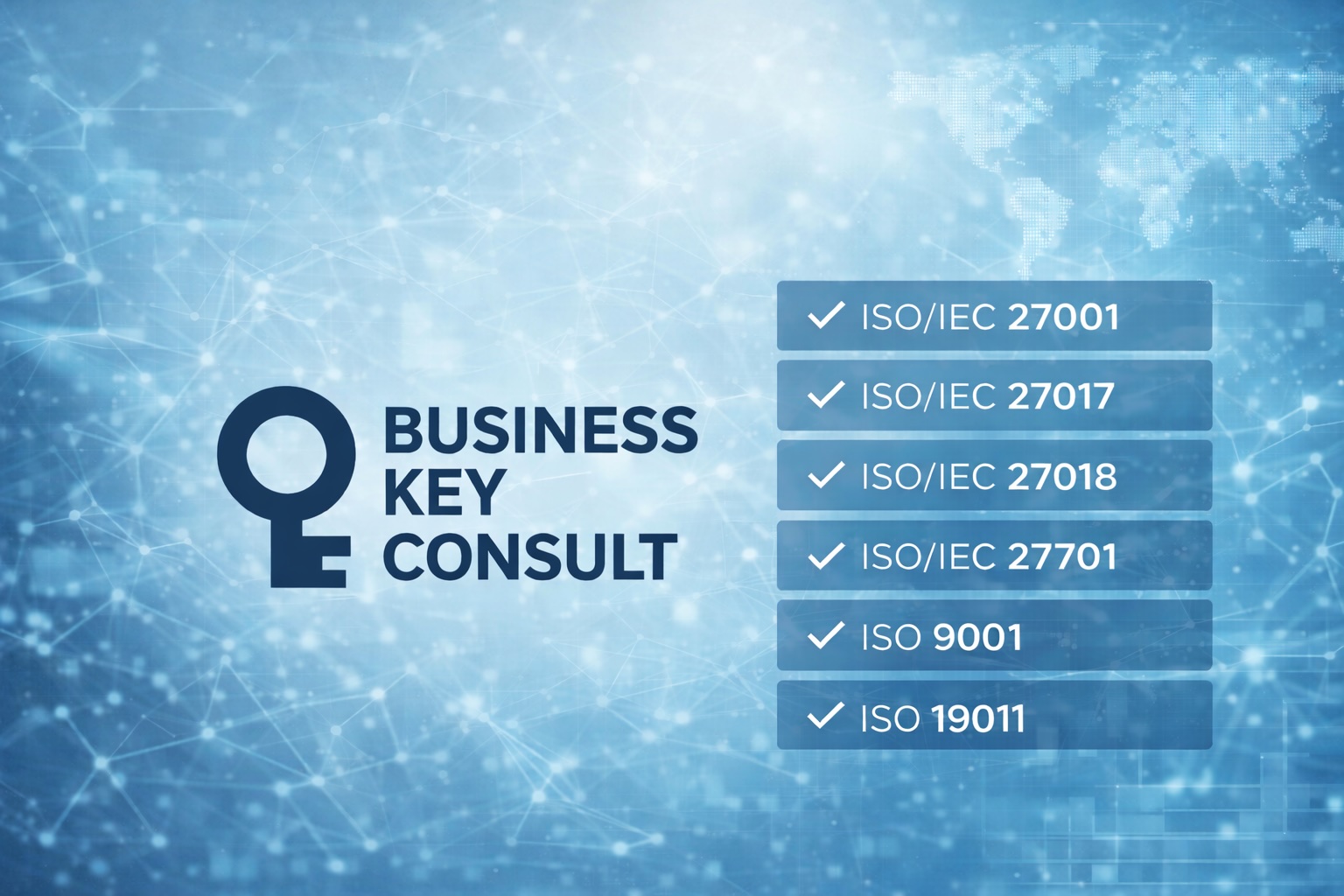
- ISO/IEC 27001:2022 – Information Security Management Systems
- ISO/IEC 27701 – Privacy Information Management (GDPR readiness)
- ISO/IEC 27017 – Cloud security controls
- ISO/IEC 27018 – Protection of PII in public clouds
- ISO 9001:2015 – Quality Management Systems
These are internal and GAP audits with a consulting nature and do not represent a certification audit or the activity of a certification body.
Our services are structured in line with applicable ISO standards and good auditing practice, to provide an objective, independent assessment and actionable outcomes. After the audit, we deliver clearly documented findings, a conformity assessment, and improvement recommendations—whether your goal is certification readiness, maintaining the management system, or assessing a specific scope.
- Focused expertise in internal and GAP audits for ISO 27001, related standards and ISO 9001
- 100% remote audit model – minimal disruption to operations
- Full confidentiality – NDA is a standard part of the process
- Fast delivery – full audit pack within 5 business days after the closing meeting
- Practical recommendations, not a theoretical checklist
- Hands-on experience with IT, SaaS, BPO, startups, fintech, and corporate environments
- Experience with EU and non-EU clients, aligned to regulatory and contractual requirements
What we offer
Independent assessment of your management system and controls, with evidence-based findings, grading, and an improvement plan.
Risk-based annual plan: schedule, scopes, criteria, and coverage across key processes and controls.
Readiness review: applicable gaps, priorities, and a clear plan for the next steps.
In this section you’ll find practical guidance related to management system standards, internal and GAP audits, and good auditing practices aligned with ISO 19011.
ISO/IEC 27001:2022 is an international standard for establishing, implementing, maintaining and continually improving an Information Security Management System (ISMS).
- identify and assess information security risks
- protect confidentiality, integrity and availability of information
- apply controls aligned to risk
- demonstrate conformity to customers and partners
- context of the organisation
- risk assessment and treatment
- policies and procedures
- controls (Annex A)
- monitoring, audit and improvement
ISO 9001:2015 is an international quality management standard focused on processes, customer satisfaction and continual improvement.
- better defined and managed processes
- higher efficiency and consistency
- better control over risks and opportunities
- improved quality of products and services
The standard is based on a process-oriented and risk-based approach.
ISO/IEC 27701 extends ISO/IEC 27001 and ISO/IEC 27002 with requirements for managing personal data and privacy.
- personal data management
- demonstrating alignment with GDPR
- defining roles and responsibilities
- implementing privacy protection measures
ISO/IEC 27017 provides additional control guidance for organisations that provide or use cloud services.
- clear responsibility split between provider and customer
- data protection in cloud environments
- incident and change management
ISO/IEC 27018 focuses on protecting personally identifiable information (PII) in public cloud services.
- transparency
- limiting use of data
- protecting data subject rights
An amendment requiring organisations to consider climate change as a potential external issue under clauses 4.1 and 4.2 across management system standards.
ISO/IEC 27001 and ISO 9001 can be implemented and audited as an integrated management system.
- risk management
- process approach
- internal audits
- nonconformity management
- continual improvement
Internal and GAP audits against these standards are performed in line with ISO 19011.
What is an internal audit?
An internal audit is an independent and objective assessment of a management system, aimed at evaluating conformity and effectiveness.
What is a gap assessment?
A gap assessment identifies differences between an organisation’s current state and the requirements of a given standard, supporting improvement planning.
What is ISO 19011?
ISO 19011 provides guidance for planning, conducting, documenting and reporting audits of management systems.
Certification, annual program, or a specific scope. Send locations/processes and timelines.